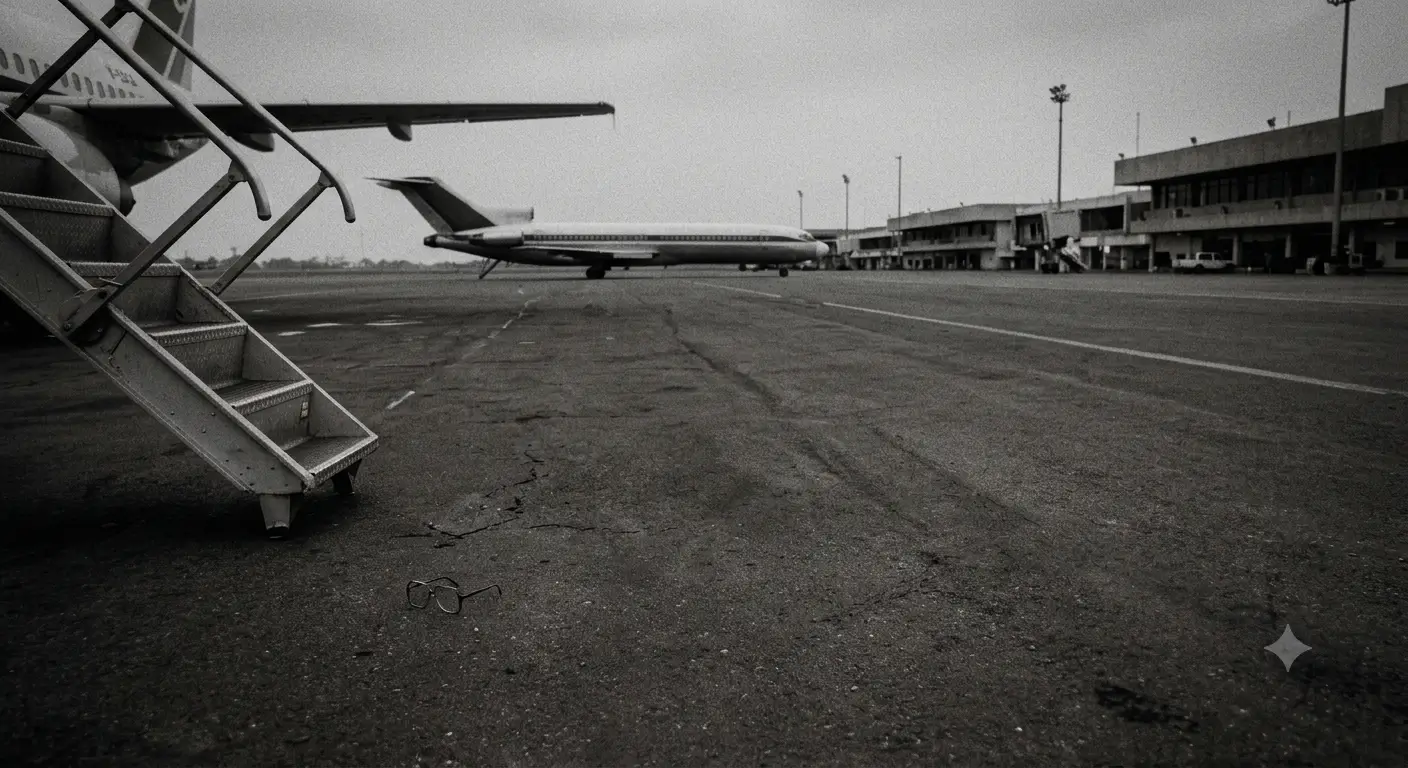
Every August 21, the Philippines pauses to remember a single gunshot on an airport tarmac — one that would, three years later, help bring down a dictatorship. Here’s the full story behind Ninoy Aquino Day.
For many Filipinos, August 21 simply means a long weekend. But behind the day off is one of the most consequential events in modern Philippine history — the assassination of Senator Benigno “Ninoy” Aquino Jr., an event historians widely credit as the spark that eventually toppled the Marcos dictatorship.
Here’s the complete story: who Ninoy Aquino was, what happened on that tarmac, and why the country still observes this day more than four decades later.
THE HOMECOMING THAT NEVER FINISHED
By 1983, Benigno “Ninoy” Aquino Jr. had spent nearly three years in self-imposed exile in the United States, after years as one of the most prominent political prisoners and vocal critics of President Ferdinand Marcos Sr.’s martial law regime. Despite repeated warnings — including from then-Defense Minister Juan Ponce Enrile, who reportedly asked him to delay his return — Aquino decided to come home.
He knew the risk. In an interview before boarding his flight, using a passport bearing the false name “Marcial Bonifacio,” Aquino was quoted saying he refused to let fear of assassination keep him hiding in a corner indefinitely.
His journey back to Manila was deliberately circuitous — stops in Singapore and Taipei before finally boarding China Airlines Flight 811 to Manila — an attempt to stay discreet and avoid a planned intercept. It didn’t work. Military intelligence had already been alerted to his “secret” arrival.
THE MOMENT ON THE TARMAC
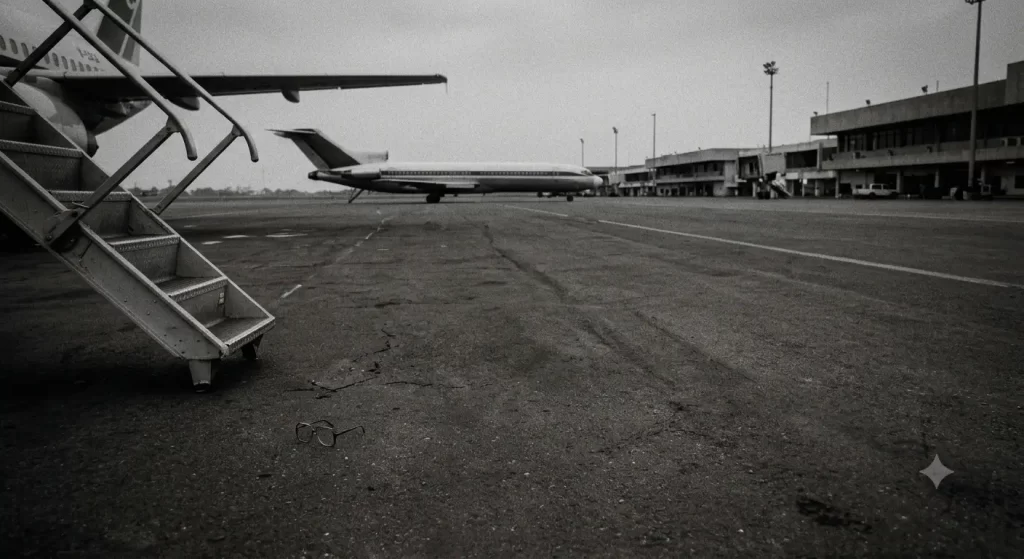
On the afternoon of Sunday, August 21, 1983, Aquino’s plane landed at Manila International Airport. Surrounded by armed military personnel, he was escorted off the plane — not through the passenger walkway, but through a service door and down an exterior staircase toward the tarmac, where over a thousand armed guards had reportedly been stationed.
Before he reached the bottom of the stairs, Aquino was shot in the back of the head. His body was thrown into a van. The soldiers who escorted him would later be charged with his murder — and later acquitted, in trials widely regarded as compromised by the Marcos government’s efforts to cover up the circumstances of his death.
Two separate investigative commissions were formed to examine the assassination. Neither definitively proved that Marcos personally ordered the killing, but the events surrounding Aquino’s death — kidnapping, intimidation, and falsified evidence, according to multiple historical accounts — deepened public suspicion of the regime’s direct involvement.
THE SPARK THAT CHANGED A COUNTRY
Aquino’s assassination did something the Marcos government almost certainly didn’t intend: it united an opposition movement that had previously been fractured. According to former Albay Representative Edcel Lagman, Aquino’s killing “galvanized the opposition” and “united various anti-Marcos groups that previously differed in their approach,” solidifying already-intense anti-Marcos sentiment nationwide.
That sentiment didn’t erupt immediately — it built over the following two and a half years, through continued martial law abuses, economic decline, and growing international scrutiny.
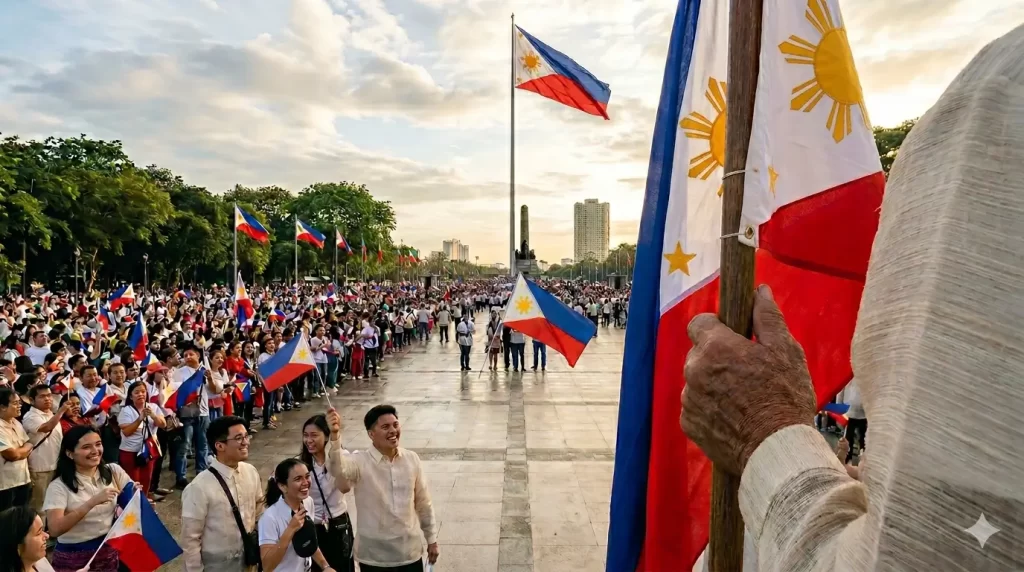
It reached its breaking point in February 1986. After a widely disputed snap election, the Marcos government declared Marcos the winner despite widespread reports of fraud — including a walkout by poll technicians protesting manipulated results. Defense Minister Juan Ponce Enrile and military Vice-Chief Fidel Ramos withdrew their support from Marcos, triggering four days of mass, peaceful demonstrations along Epifanio de los Santos Avenue (EDSA) in Metro Manila — what became known as the EDSA People Power Revolution.
On February 25, 1986, Ferdinand Marcos and his family fled to Hawaii. Corazon Aquino — Ninoy’s widow, who had stepped into the political spotlight following his death — was installed as President, marking the restoration of democratic government in the Philippines.
The direct line historians draw is clear: no August 21, 1983, very likely no February 25, 1986 — at least not in the same form, or on the same timeline.
Curious about the anniversary connection? February 25, 2026 marks the 40th anniversary of EDSA — read the details in our proclamation breakdown, where we cover why it’s a special working day rather than a non-working holiday.
JUSTICE, DELAYED AND PARTIAL
In the years following the EDSA Revolution, sixteen military personnel were eventually convicted in connection with Aquino’s assassination. Many were later released, and questions about who ultimately ordered the killing have never been fully, conclusively resolved in the eyes of many historians and legal observers — leaving Aquino’s death, even decades later, as a story without a complete final chapter.
WHY IT’S A HOLIDAY
August 21 became a permanent national holiday under Republic Act No. 9256, which designates the date every year as a non-working holiday commemorating Aquino’s death anniversary. Unlike some holidays that require a fresh proclamation to exist at all, Ninoy Aquino Day’s legal foundation is permanent — what changes year to year is simply its official scheduling and classification, confirmed annually through presidential proclamation.
For 2026, that confirmation came via Proclamation No. 1006, signed by President Marcos Jr. in September 2025, which classified August 21, 2026 (a Friday) as a Special (Non-Working) Day — creating a three-day weekend from August 21 to 23.
Want the full legal breakdown? Read our Malacañang Confirms: Ninoy Aquino Day 2026 Is a Special Non-Working Holiday
Working that day? Check our Ninoy Aquino Day Pay Rules: What You’re Entitled to If You Work
QUICK FACTS
| Detail | Information |
|---|---|
| Full date | Sunday, August 21, 1983 (assassination) |
| Location | Manila International Airport (now NAIA) |
| Legal basis for the holiday | Republic Act No. 9256 |
| 2026 classification | Special (Non-Working) Day |
| 2026 date | Friday, August 21, 2026 |
| Resulting long weekend | August 21–23, 2026 |
| Historical significance | Widely credited as the catalyst for the 1986 EDSA People Power Revolution |
WHY THE STORY STILL MATTERS
More than four decades later, Ninoy Aquino Day isn’t just a commemoration of one man’s death — it’s a reminder of how a single act of political violence can reshape a nation’s trajectory. For younger Filipinos who didn’t live through martial law or EDSA, the holiday is often the one moment each year the full story resurfaces: the homecoming, the tarmac, the years of unrest that followed, and the peaceful revolution it ultimately helped ignite.
Continue exploring our full Ninoy Aquino Day coverage: Malacañang Confirms: Ninoy Aquino Day 2026 Is a Special Non-Working Holiday · Ninoy Aquino Day Pay Rules: What You’re Entitled to If You Work · August 2026’s Double Long Weekend: Ninoy Aquino Day to National Heroes Day
This is the anchor pillar article for our Ninoy Aquino Day 2026 content series. We’ll continue expanding this cluster with additional angles, including Ninoy’s most iconic quotes and a full martial law-to-EDSA timeline.
SOURCES / FOOTNOTES
- Rappler, “LOOK BACK: The Ninoy Aquino assassination”.
- EBSCO Research Starters, “Assassination of Philippine Opposition Leader Benigno Aquino”.
- Philippine Daily Inquirer, “Ninoy Aquino’s death lit the path towards Edsa revolution — Lagman”, August 21, 2023.
- Wikipedia, “People Power Revolution”.
- Sinaunang Panahon, “The Assassination of Opposition Leader Ninoy Aquino”.
- Presidential Communications Office, “PBBM issues proclamation declaring regular holidays, special non-working days for 2026”, September 2025.