President Marcos framed the Pax Silica Industrial Hub as a jobs-and-competitiveness win in his SONA 2026 address. But since the Philippines formally joined the Pax Silica Initiative in April 2026, the project has drawn Why Is Pax Silica Controversial? The Other Side of the AI Hub
The government calls it a jobs engine and a step toward tech independence. Farmers, scientists, and Indigenous groups call it a “massive sellout.” Here’s the full picture of the opposition to Pax Silica.
President Marcos framed the Pax Silica Industrial Hub as a jobs-and-competitiveness win in his SONA 2026 address. But since the Philippines formally joined the Pax Silica Initiative in April 2026, the project has drawn sustained opposition from farmers’ groups, scientists, environmental organizations, Indigenous communities, and left-leaning lawmakers — opposition serious enough to bring protesters marching to the US Embassy in Manila.
Here’s what the critics are actually saying.
New to this topic? Start with What Is Pax Silica? The AI Industrial Hub Marcos Revealed at SONA for the basics.
MASS DISPLACEMENT CONCERNS
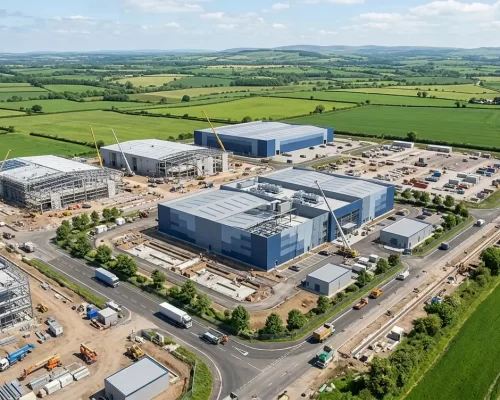
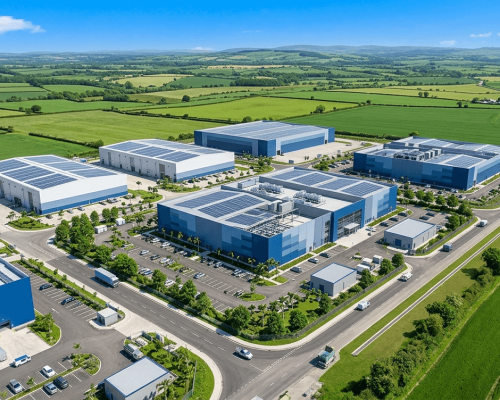
The most immediate concern involves the people currently living on the 1,600-hectare (roughly 4,000-acre) site earmarked for the hub inside New Clark City, Tarlac.
Advocacy groups estimate that as many as 20,000 residents and 15,000 farmers could be displaced by the project. Much of the dispute centers on land titles: many families have lived on and farmed this land for generations without formal titles, and critics argue the absence of paperwork is being used to erase their claims rather than resolve them fairly.
The environmental group Kalikasan has also raised the specific concern that the hub could displace roughly 20,000 members of the Aeta community, an Indigenous group with ancestral ties to the region.
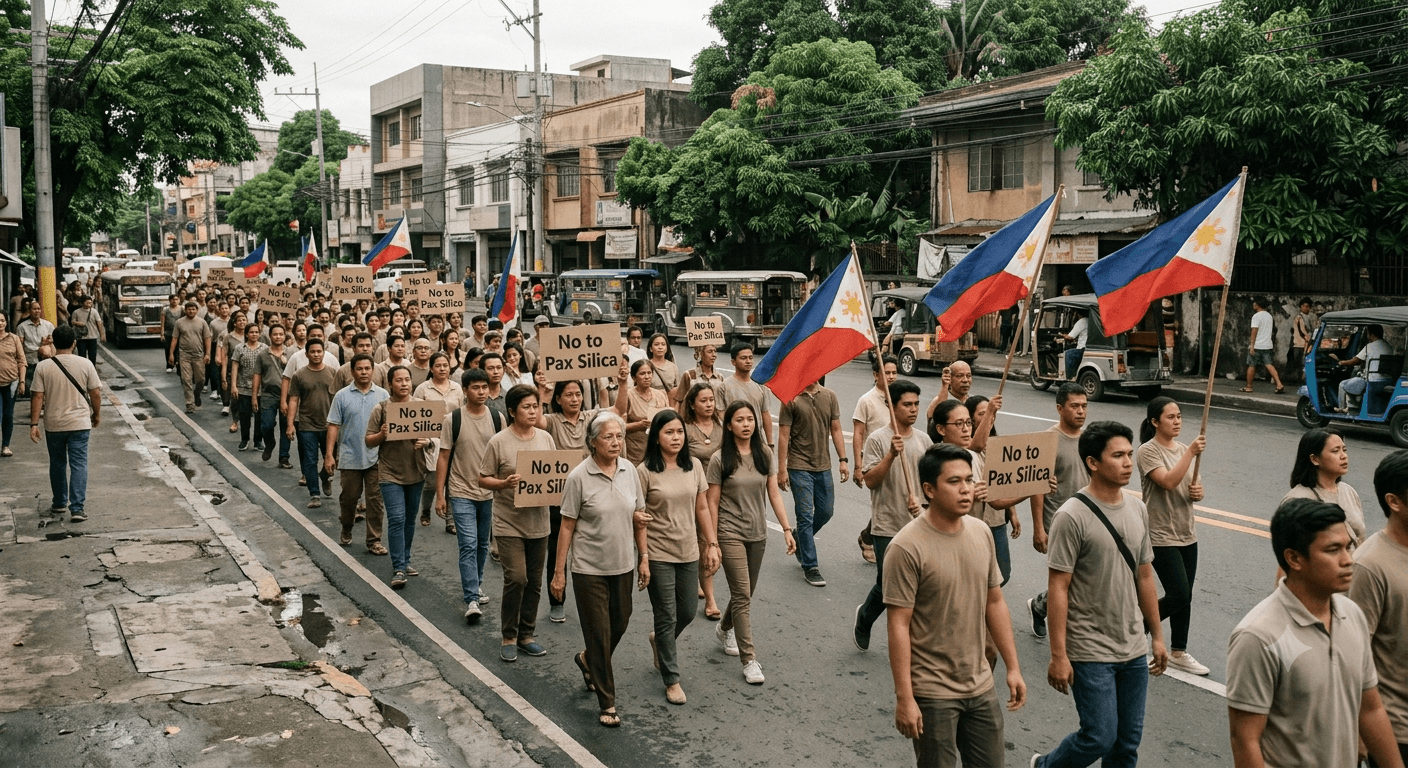
On July 13, 2026, a coalition of scientists, environmentalists, and farmers marched in Manila toward the US Embassy specifically to protest the project, with demonstrators saying local farmers were being told to leave to make way for construction.
WATER AND ENVIRONMENTAL STRAIN
A second major concern involves water supply. New Clark City draws its primary water source from the Sacobia watershed, which environmental advocates say has already shown signs of strain since 2020.
Critics warn that a large-scale industrial and semiconductor complex — combined with AI data centers, which require substantial water for cooling — could worsen water stress for surrounding communities. Government officials have pushed back on this concern, insisting current supply is sufficient and that local needs will remain the priority.
AI data centers also raise separate concerns beyond water: critics point to their heavy electricity demand, and to potential noise pollution that could disturb local wildlife in the area.
FEARS OF A MINING “PLUNDER”
Perhaps the sharpest criticism involves what the hub will actually need to function: critical minerals. Because Pax Silica’s semiconductor and AI ambitions depend on securing materials like copper and nickel, opponents fear the initiative will accelerate large-scale mining activity in provinces such as Zambales, Palawan, and Nueva Vizcaya — areas critics say have already suffered decades of deforestation, silted rivers, and polluted watersheds.
The militant farmers’ group Kilusang Magbubukid ng Pilipinas (KMP) was especially blunt in its assessment, describing the Philippines’ accession to Pax Silica as a “massive sell-out” that would intensify land and resource grabbing, extraction, and militarization in rural areas. In Filipino, the group put it starkly: the country’s experience with large-scale mining has already meant “bald mountains, poisoned rivers, and communities turned into dumping grounds for mine tailings.”
A regional news report on Pax Silica’s environmental angle went further, describing some critics’ framing of the initiative as a “war production disguised as so-called development” — reflecting how deeply this criticism ties the project to broader anxieties about foreign geopolitical interests operating on Philippine soil.
SOVEREIGNTY AND GOVERNANCE QUESTIONS
Beyond environmental issues, the project has also triggered political and legal concerns. In May 2026, members of the left-wing Makabayan Bloc in Congress raised concerns about sovereignty and governance arrangements tied to the initiative — including reports of proposed special legal arrangements for foreign personnel operating at the hub.
Government agencies and project proponents have maintained that any development at the site will remain subject to Philippine law and regulatory oversight. Still, a separate dispute has emerged over the legal status of the proposed Pax Silica “economic security zone” itself.
Some commentary has framed the broader arrangement as effectively deepening foreign — and specifically American — economic and strategic influence over the Philippines, with critics warning it could expose the country to wider geopolitical tensions, including friction with China, given the initiative’s explicit goal of reducing dependence on Chinese-controlled supply chains.
SCIENTISTS PUSH BACK ON OFFICIAL CLAIMS
The criticism hasn’t come only from farmers’ and environmental groups. The scientists’ organization Agham has directly challenged the government’s public messaging on the project, with spokesperson Giovanni Tapang arguing that the Bases Conversion and Development Authority (BCDA) — the state agency overseeing New Clark City — has presented an incomplete picture of the hub’s potential environmental and social impacts.
THE GOVERNMENT’S RESPONSE
The BCDA has pushed back on several of these concerns directly. BCDA President and CEO Joshua Bingcang has said the project will comply with the required Environmental Compliance Certificate, and that all investments remain subject to Philippine law, regulations, and government oversight.
On the mineral-sourcing question specifically, BCDA officials have said the country’s natural resources will be processed domestically rather than simply extracted and shipped out — with the option of also sourcing components or critical minerals from other Pax Silica member countries rather than relying solely on Philippine mining. As of publication, Manila is reportedly working to finalize a framework agreement with Washington for the hub within two to three months.
THE OPPOSITION AT A GLANCE
| Concern | Who’s Raising It | Core Claim |
|---|---|---|
| Mass displacement | Local farmers, advocacy groups | Up to 20,000 residents and 15,000 farmers could be displaced |
| Indigenous rights | Kalikasan | Up to 20,000 Aeta community members at risk of displacement |
| Water stress | Environmental advocates | Sacobia watershed already strained; AI data centers need heavy water use |
| Mining expansion | KMP, environmental groups | Fear of accelerated mining in Zambales, Palawan, Nueva Vizcaya |
| Sovereignty/governance | Makabayan Bloc | Concerns over special legal arrangements for foreign personnel |
| Incomplete impact data | Agham (scientists’ group) | Says BCDA has not presented full picture of risks |
WHY THIS MATTERS FOR THE BIGGER PICTURE
The gap between the government’s framing of Pax Silica — jobs, competitiveness, economic revitalization — and the concerns raised by farmers, scientists, and Indigenous groups mirrors a pattern seen across other SONA 2026 issues: Filipinos, and Filipino advocacy groups in particular, appear far more responsive to verifiable detail than to broad reassurance.
Whether Pax Silica ultimately becomes a genuine economic win or a flashpoint for land and environmental conflict will likely depend on details still being negotiated — the framework agreement with Washington, the environmental review process, and how (or whether) affected communities are consulted and compensated before construction begins.
🏛️ Continue exploring the SONA 2026 AI cluster: SONA 2026: Marcos’ AI Agenda — Pax Silica, AI Literacy, and Online Safety · AI Industry Jobs: What Pax Silica Really Means for Filipinos
This is an evolving article — we’ll update it as the framework agreement, environmental review, and community consultation process for Pax Silica develop.
SOURCES / FOOTNOTES
Wikipedia, “Pax Silica”.The Manila Times, “The Pax Silica initiative”, July 19, 2026.Business and Human Rights Centre, “Philippines: push for Pax Silica project criticized by local groups, raising risks to environment, water, and community rights”.Manila Bulletin, “Pax Silica, explained”, July 22, 2026.PhilSTAR Life, “What exactly is Pax Silica, and why is it sparking environmental concern?”.Philstar.com, “Scientists’ group debunks claims on Pax Silica project”, July 27, 2026.South China Morning Post, “Philippines’ Pax Silica AI hub plan slammed for mineral ‘plunder'”.The Manila Times, “Scientists, environmentalists, farmers hit Pax Silica AI hub”, July 19, 2026.Philippine Daily Inquirer, “Myths vs facts: BCDA allays fears on controversial Pax Silica project”.Rappler, “Pax Silica, El Niño: Environmental issues for SONA 2026”.