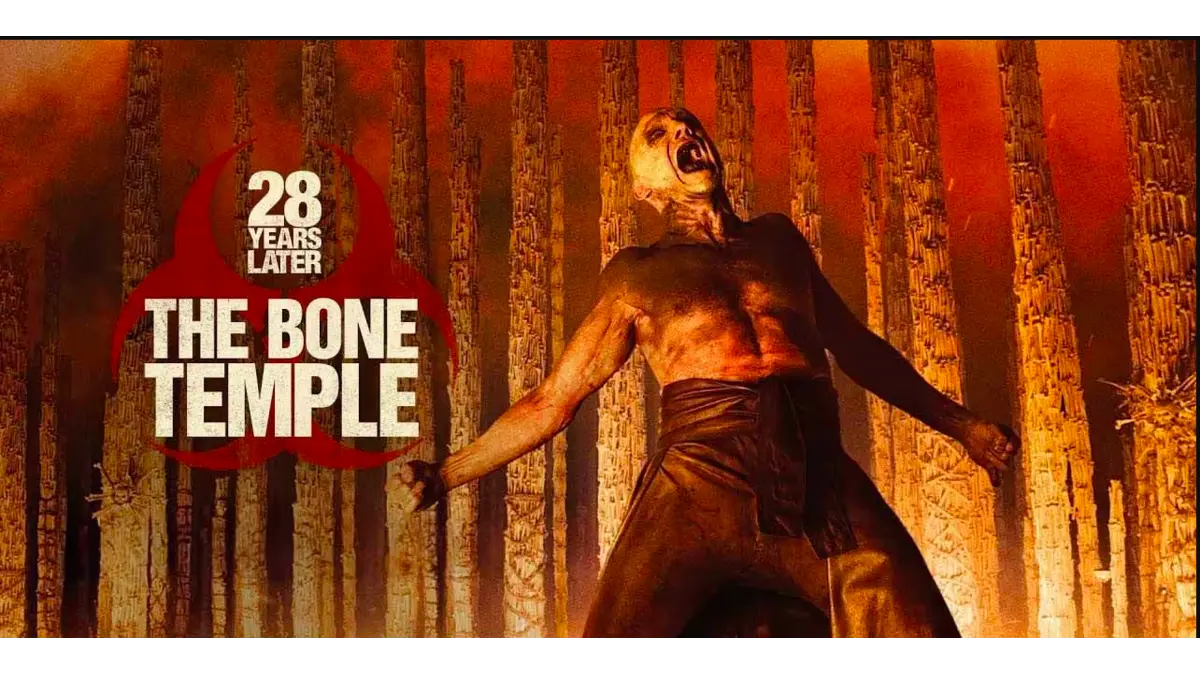
28 Years Later: The Bone Temple marks a bold and unsettling chapter in the long-running 28 Days Later franchise, pushing the story forward nearly three decades after the original outbreak. Directed by Nia DaCosta and written by Alex Garland, the film shifts focus from the chaos of infection to the disturbing ways survivors reshape morality, belief, and power in a broken world.
Rather than relying solely on relentless action, The Bone Temple leans into psychological horror and dark symbolism. The result is a sequel that feels more reflective, more disturbing, and in many ways more human.
A Cast That Elevates the Horror
The film is anchored by a powerful ensemble cast:
-
Ralph Fiennes as Dr. Ian Kelson, a former general practitioner who has survived long enough to become both witness and caretaker of the dead. His character brings emotional weight and a haunting sense of restraint to the story.
-
Jack O’Connell as Sir Lord Jimmy Crystal, a charismatic yet deeply unhinged cult leader whose twisted belief system lies at the heart of the film’s conflict.
-
Alfie Williams as Spike, a young survivor navigating a world shaped by violence, faith, and manipulation.
-
Erin Kellyman as Jimmy Ink, a devoted cult member whose loyalty is tested as cracks begin to form within the group.
-
Chi Lewis-Parry as Samson, a physically imposing infected figure whose presence challenges traditional ideas of who—or what—still deserves compassion.
Cillian Murphy, the face of the original film, is involved behind the scenes as an executive producer, reinforcing continuity within the franchise and its long-term vision.
A Story About Survival—and What Comes After
Set long after society’s collapse, The Bone Temple explores how survival alone is no longer enough. Communities have formed new rules, rituals, and hierarchies. At the center of it all is the Bone Temple itself—a disturbing symbol of memory, reverence, and control.
The film asks uncomfortable questions: What happens when faith replaces reason? When remembrance becomes obsession? And when leaders exploit fear to create meaning out of destruction?
Flashbacks and present-day events gradually reveal how the past still dictates the present, making the story as much about memory as it is about survival.
Tone, Themes, and Visual Style
Visually, the film is bleak but deliberate. Muted colors, decaying structures, and long silences create an atmosphere of unease. Violence is present, but never gratuitous—each moment feels purposeful, reinforcing the film’s central themes of guilt, belief, and moral decay.
Unlike earlier entries that emphasized speed and panic, The Bone Temple slows the pace, allowing dread to build gradually. The horror comes not from how fast the infected move, but from how far humanity has fallen.
Why The Bone Temple Matters
28 Years Later: The Bone Temple stands out because it dares to evolve the franchise. It is less about the virus and more about the aftermath—about how people justify cruelty, rewrite history, and search for meaning in ruins.
The film doesn’t offer easy answers or clear heroes. Instead, it leaves viewers unsettled, reflective, and questioning where the real danger lies: in the infected, or in those who survived them.