Dear PAO,
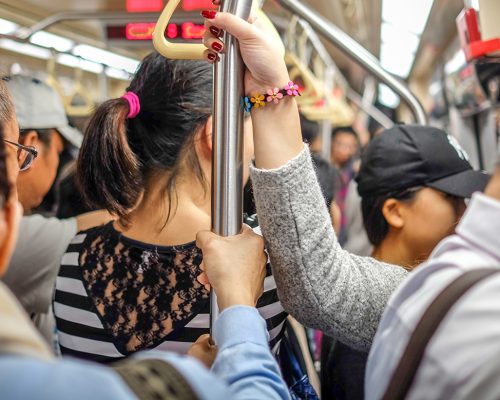
My husband and I are regular commuters. We travel daily from Silang, Cavite to Manila City. We take different kinds of public vehicles to get from one place to another. We have noticed that there are times that we fear for our lives as the drivers are like Formula 1 drivers, even if they are not at the Skyway, their speedometer reads 80 to 100kph in barangay roads. Is there any law that mandates trucks, buses, and public utility vehicles (PUVs) to have a speed limiter?
Kym
Dear Kym,
Please be informed of Section 4 of Republic Act 10916, otherwise known as the “Road Speed Limiter Act of 2016,” which states that:
“Section 4. Mandatory Installation of Speed Limiter. – No covered vehicle, following the effectivity of this Act, shall be allowed to run in any road, street or highway in the Philippines without a standard speed limiter in accordance with the standards and specifications approved by the DOTC; Provided, That in case of vehicles which are already registered with any appropriate agency, this requirement shall be complied with not later than eighteen (18) months from the effectivity of this Act.”
“Section 3 (b) of the same law then provides that “covered vehicle refers to any closed van, hauler or cargo trailer, PUV, shuttle service, or tanker truck as defined under this section and such other vehicles as may hereinafter be determined and included by the Department of Transportation and Communications (DOTC) for the purpose of applying the provisions of this Act; excluding taxicabs, and public utility jeepneys (PUJs), without prejudice to the review by the DOTC after one (1) year on the necessity of their inclusion in the coverage of this Act.”
Based on the above-stated law, public utility vehicles or common carriers, with the exception of taxicabs and PUJs, duly registered with the Land Transportation Office (LTO) and granted a franchise by the Land Transportation Franchising and Regulatory Board (LTFRB) shall not be allowed to run on any road, street, or highway in the Philippines without a standard speed limiter.
Thus, there is actually a law prescribing speed limiters for certain types of PUVs. If the law is violated, penal liability will attach to the transgressor as provided under Section 9 of the same law, viz.:
“Section 9. Fines/Penalties. – (a) The driver who operates a motor vehicle covered by this Act or the owner or operator who allows such driver to operate without the speed limiter herein required shall suffer a fine in the amount of fifty thousand pesos (₱50,000.00).
“(b) The same fine shall be imposed upon the driver, owner or operator who operates or allows a person to operate a motor vehicle with a nonfunctioning or tampered speed limiter.
“In addition to the above fines, a suspension of the driver’s license for a period of one (1) month or franchise of a motor vehicle for a period of three (3) months, as the case may be, shall be imposed upon the offender who commits the above mentioned violations for the first time.
“For the commission of any of the foregoing prohibited acts for the second time, the driver’s license of the offender shall be suspended for a period of three (3) months or the franchise of a motor vehicle shall be suspended for a period of six (6) months, as the case may be. in addition to the fines herein imposed.
“For the subsequent commission of any of the foregoing prohibited acts, the driver’s license of the offender shall be revoked or the franchise of a motor vehicle shall be suspended for a period of one (1) year, as the case may be, in addition to the fines herein imposed.
“(c) Any person who is found guilty of tampering as defined in this Act shall suffer a penalty of imprisonment of not less than six (6) months but not more than three (3) years and a fine of thirty thousand pesos (₱30,000.00).
“The provision of this section shall be applied without prejudice to criminal prosecution or civil action under existing applicable laws.”
We hope that we were able to answer your queries. Please be reminded that this advice is based solely on the facts you have narrated and our appreciation of the same. Our opinion may vary when other facts are changed or elaborated on.
Editor’s note: Dear PAO is a daily column of the Public Attorney’s Office. Questions for Chief Acosta may be sent to dearpao@manilatimes.net