No single name. No fixed date agreed on by historians. And yet, every last Monday of August, the Philippines pauses to honor an entire revolution’s worth of heroes at once. Here’s the complete story behind National Heroes Day.
Most Philippine holidays honor one person: Rizal Day for José Rizal, Bonifacio Day for Andrés Bonifacio. National Heroes Day is different by design. It’s the one major holiday on the calendar that deliberately names no one — built instead to honor every Filipino, known and unknown, who fought for the nation’s independence.
Here’s the full story: the event it traces back to, why even historians can’t agree on exactly when or where it happened, and how the holiday itself evolved into what it is today.
THE CRY THAT STARTED A REVOLUTION
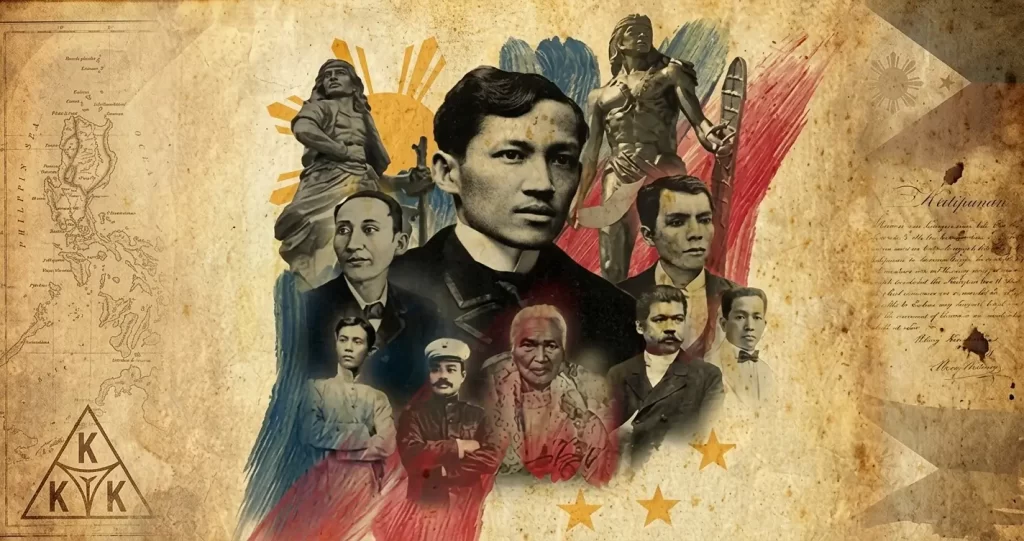
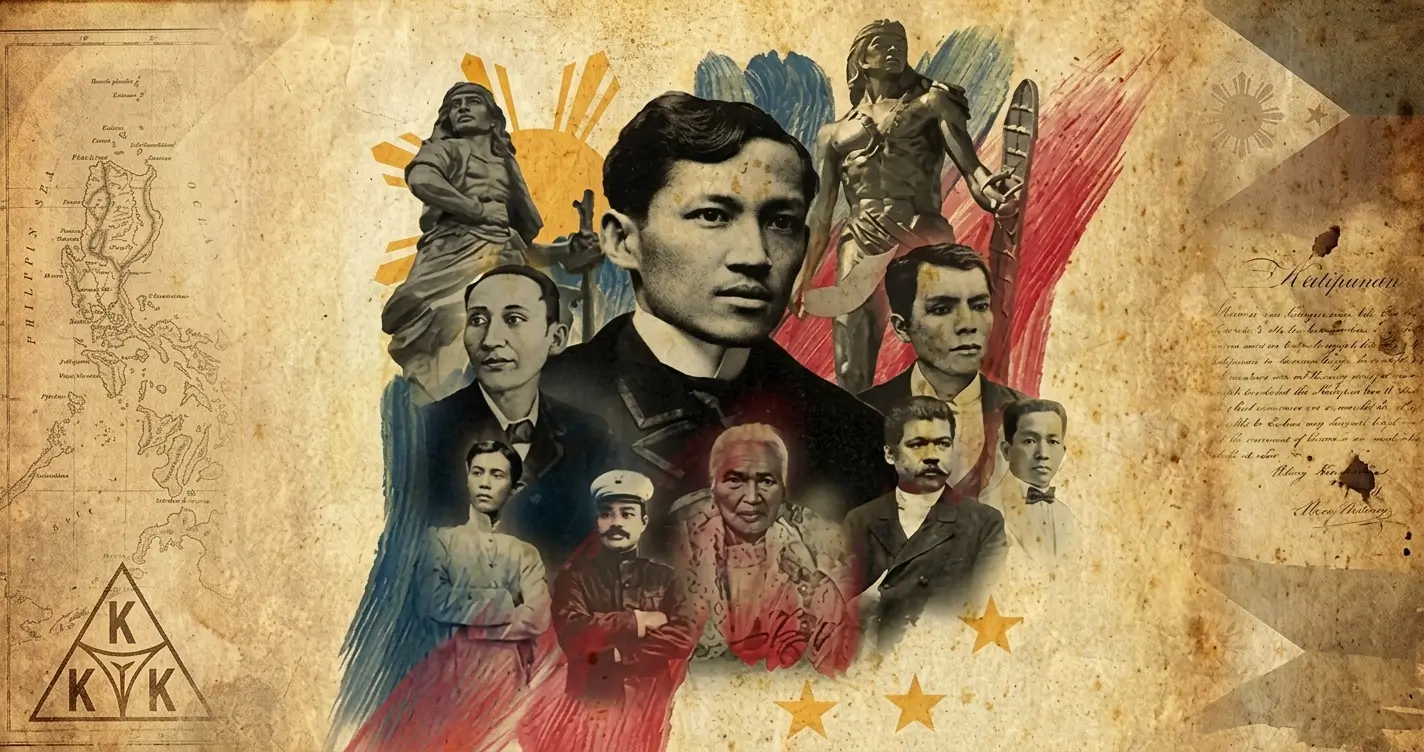
The holiday’s roots trace back to late August 1896, when members of the Katipunan — a secret revolutionary society formally known as the Kataas-taasang, Kagalang-galangang Katipunan ng mga Anak ng Bayan (“Supreme and Venerable Association of the Children of the Nation”), abbreviated KKK — rose up against Spanish colonial rule under the leadership of Andrés Bonifacio.
The moment has come to be known as the Cry of Pugad Lawin (or, in earlier accounts, the Cry of Balintawak) — a “cry” not in the literal sense, but as a symbolic shout of rebellion. According to the most widely accepted account, Katipuneros gathered and tore up their cedulas (Spanish-issued residence tax certificates) as an act of defiance, declaring their allegiance to the revolution over the colonial government.
That single act of tearing paper marked the beginning of the Philippine Revolution, a struggle that would stretch on for years and ultimately reshape the nation’s path toward independence.
THE DATE NOBODY CAN AGREE ON
Here’s where the story gets genuinely complicated — and it’s a detail most casual holiday explainers skip entirely.
Historians have never fully settled on exactly when or where the Cry took place. Competing eyewitness accounts point to different dates and different locations:
- Pío Valenzuela, a high-ranking Katipunan official, claimed the event occurred on August 23, 1896, in Pugad Lawin.
- Guillermo Masangkay, another Katipunero, insisted it happened on August 26, 1896, in Balintawak — and disputed that the officials Valenzuela named were even present.
- Still other accounts point to locations including Bahay Toro, Kangkong, and Pasong Tamo, all within the general area of what was then greater Caloocan (spanning into what’s now Quezon City).
- The Biak-na-Bato constitution, drafted during the revolution itself, stated the uprising began on August 24, 1896 — yet another date.
For decades, the official government position placed the event on August 26 in Balintawak, commemorated there from 1908 to 1962. In 1963, President Diosdado Macapagal shifted the official commemoration to August 23 in Pugad Lawin, Quezon City — the version most commonly taught today, though historians continue to debate its accuracy.
As historian Ambeth Ocampo once put it, after laying out the competing claims: despite all the heated discussion over the details, the general outline of the story remains the same and without question — somewhere in Caloocan, sometime in August 1896, the Katipunan Supremo changed the course of Philippine history.
HOW THE HOLIDAY ITSELF TOOK SHAPE
National Heroes Day as an official holiday didn’t appear immediately after the revolution — it was formally established in 1931, specifically to honor revolution-era heroes who hadn’t been given holidays of their own, the way Rizal and Bonifacio eventually would be.
Its scheduling has shifted more than once since then:
- Originally observed on the last Sunday of August, under a 1931 law (Act No. 3827).
- Shifted to the last Monday of August under Republic Act No. 9492, signed in 2007 — a change designed specifically to guarantee a long weekend every year, part of a broader “holiday economics” policy.
Want the official 2026 confirmation and pay classification? Read our Malacañang Confirms: National Heroes Day 2026 Falls on August 31
👥 WHO THE HOLIDAY ACTUALLY HONORS
Unlike Rizal Day or Bonifacio Day, National Heroes Day was never legally tied to one individual — it was designed from the outset to honor the collective heroism of Filipinos, named and unnamed, who contributed to the nation’s freedom.
That said, in November 1995, the National Heroes Committee formally recognized nine historical figures for their significant contributions: Andrés Bonifacio, José Rizal, Apolinario Mabini, Emilio Aguinaldo, Marcelo H. del Pilar, Juan Luna, Gabriela Silang, Melchora Aquino, and Sultan Dipatuan Kudarat. Even so, this list exists separately from the holiday’s legal foundation — National Heroes Day itself still names no one specifically, by design.
QUICK FACTS
| Detail | Information |
|---|---|
| Traces back to | The Cry of Pugad Lawin (or Balintawak), August 1896 |
| Exact date | Disputed among historians (Aug 23, 24, or 26, 1896) |
| Led by | Andrés Bonifacio and the Katipunan |
| Holiday established | 1931 |
| Fixed to last Monday of August | 2007, under Republic Act No. 9492 |
| 2026 date | Monday, August 31 |
| Classification | Regular Holiday |
| Names a specific hero? | No — honors all heroes collectively |
WHY THE STORY STILL MATTERS
What makes National Heroes Day distinct isn’t just its collective framing — it’s that even its founding event resists a tidy, singular narrative. Historians still argue over the date. Competing eyewitnesses gave conflicting accounts. Different towns claim different locations. And yet the holiday endures precisely because it was built to honor a movement, not a moment — the thousands of Filipinos across the archipelago who took up the same cause, whether or not history remembered their names.
For a country whose most famous holidays commemorate individuals, National Heroes Day remains the one day explicitly reserved for everyone the history books left out.
Continue exploring our full National Heroes Day coverage: Malacañang Confirms: National Heroes Day 2026 Falls on August 31 · National Heroes Day Pay Rules
This is the anchor pillar article for our National Heroes Day 2026 content series. We’ll continue expanding this cluster with additional angles, including the women often left out of Heroes Day conversations and how it compares to Bonifacio Day and Rizal Day.
SOURCES / FOOTNOTES
- Wikipedia, “National Heroes Day (Philippines)”.
- Wikipedia, “Cry of Pugad Lawin”.
- National Historical Commission of the Philippines, “A Cry for Clarification: A Short Discussion on the Controversies Surrounding the Cry of Pugadlawin”.
- Philippine News Agency, “Debate on the date and place of 1896 ‘Cry’ for PH freedom”, August 2023.
- Philstar.com, “Honoring Filipino heroes”, August 2020.
- Daily Tribune, “‘Cry of Pugad Lawin’ marks 130th anniversary”, August 2026.
- Awareness Days, “National Heroes’ Day 2026: 31 August 2026”.
- AnyDayGuide, “National Heroes’ Day in the Philippines / August 31, 2026”.